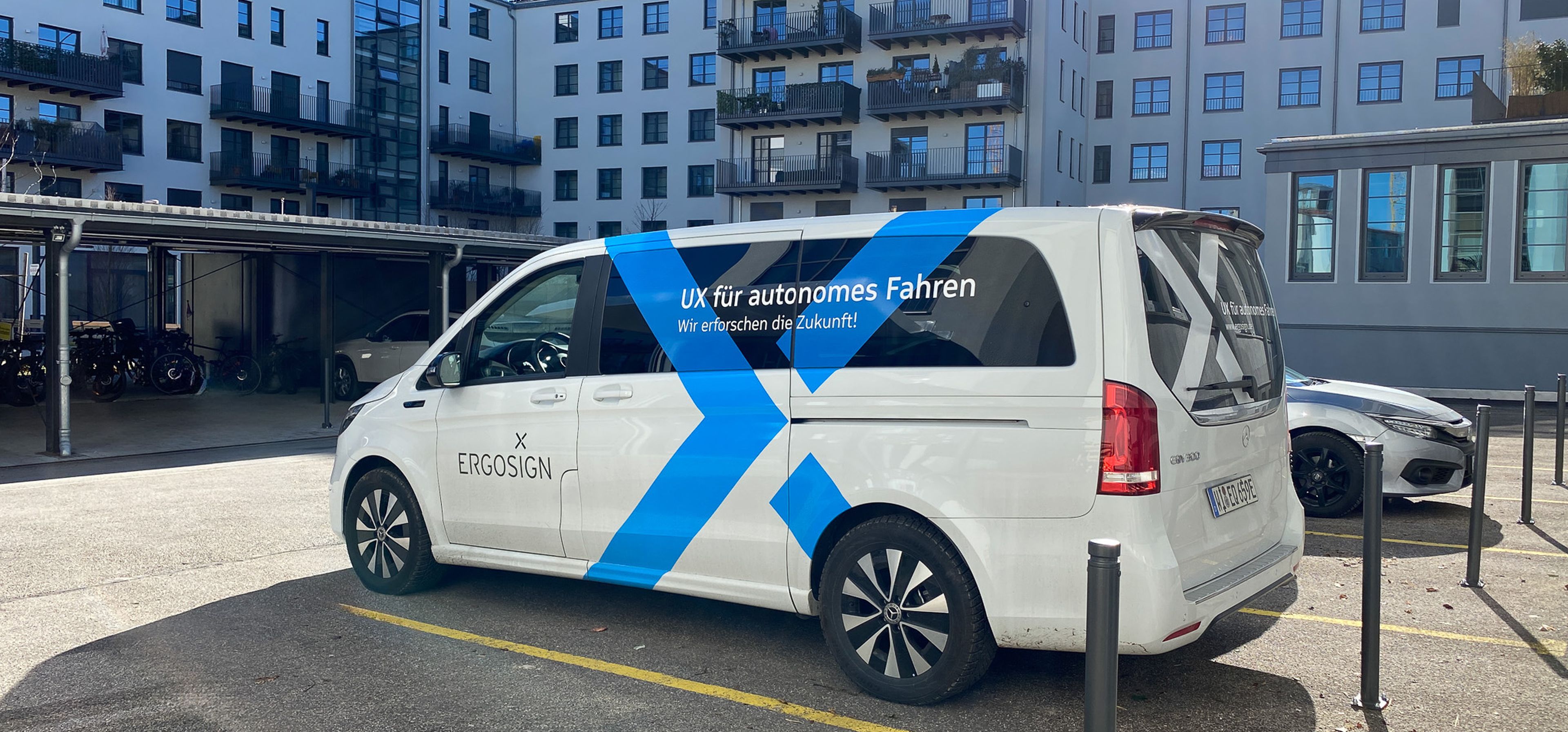
Our WoOz setup simulated an AV ride through the city using an electric Mercedes-Benz EQV minivan, providing a flexible and easily replicable set-up for future experiments. The windshield HMI prototype displayed real-time augmented reality (AR) bounding box visualizations over detected objects. Three concept variants were designed, including baseline information, counts of detected objects per class in a status bar, and a combination of both. These variants aimed to gauge the impact of the amount of displayed information on passengers' experience.
Our study involved 30 participants, with a balanced distribution of gender and a diverse age range. Participants experienced test rides in the WoOz vehicle through an urban environment, with stops at parking lots to change HMI variants. Data collection included both quantitative and qualitative measures, such as standardized questionnaires, as well as single-item assessments of perceived risk, safety, well-being, and nausea.
The research methodology also incorporated a semi-structured interview and debriefing session to gather participants' feedback on their preferences. This comprehensive approach aimed to provide valuable insights into enhancing AV passengers' acceptance and UX by leveraging transparent system information, with a focus on the challenges posed by real urban environments. The study's findings can contribute to the development of effective and user-friendly HMIs for future autonomous vehicles.



)
)
)
)